Showing posts with label Malaysia. Show all posts

Sunday, March 3, 2013

Sulu sea piracy

Pirates have landed. I'm not kidding: an army of desperate pirates from the Philippines arrived on the east coast of Sabah a few weeks ago, and have proceeded to engage in a number of standoffs with the police and army.

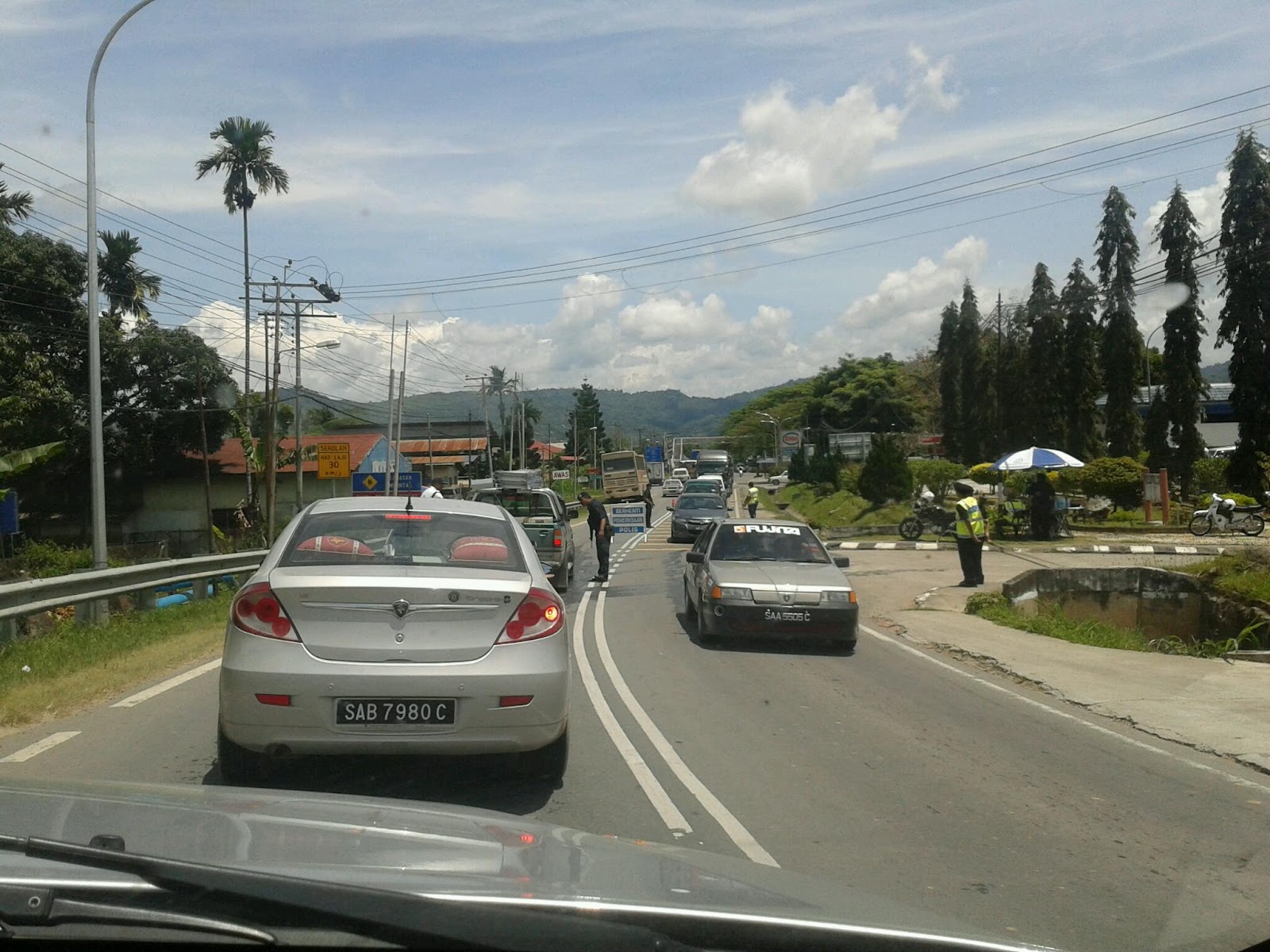
At the beginning, all we in the interior knew of it was colleagues on the east coast having to drive through several police roadblocks a day. But it's descending into gunfights and deaths, and while the town of Lahad Datu has become a ghost town and our colleagues are staying home, we further inland are also now dealing with roadblock after roadblock. Each car must be stopped, and each driver and passenger scrutinised. Suspicious cars are pulled over and papers examined. And god help you if you happen to be Filipino.


Now, the story itself is rather romantic, in the historical sense rather than the love sense. The invaders call themselves the "Army of Sulu" and they are led by the brother of the Sultan of Sulu. A couple of centuries ago, the whole of northern Sabah was given to the Sultan of Sulu by the Sultan of Brunei - because that's what monarchs do, they give each other huge swathes of land and dominion over the people who live there (the Sultan of Brunei also gave most of Sarawak away - to the white rajah, James Brooke. But that's another story.)

Later on, the Sultan of Sulu came to an agreement with the British North Borneo Company, leasing the land in perpetuity on payment of a yearly rent.

So far so good.

Then came the Second World War. Poor little Sabah got bombed twice, once by each side, and then afterwards, the Company bankrupt, it got handed over to the British government. The British government later granted independence to the Straits colonies, which became the Malayan Union, and then, in the 1960s, Sabah, along with Singapore and Sarawak, decided to join Malaya, and form the Federation of Malaysia.

The problem is that the Sultan of Sulu leased the land to the British North Borneo Company, not to the government of Malaysia, and although Malaysia still pays the rent each year, the Army of Sulu is keen to remind everyone that Sabah still belongs to the Sultanate of Sulu - and therefore, in modern terms, to the Philippines.

You see the problem?

An additional issue of course is that it's election year. On the one hand, the government doesn't want to be embarrassed, while on the other hand, it's been mooted that the invasion has been especially engineered in order to allow the government to show Sabahans that they need them - Sabah is currently not a safe win for the ruling party, and we've been seeing a lot of politicians lately, handing out cash to poor families and students and generally showing Sabahans that they're a good bunch, really, why vote us out now?

And while the endless roadblocks are an annoyance, should the Malaysian government not come to some kind of peaceful resolution that will avoid incensing the nearly one million Filipinos in Sabah, we may be looking at more serious disruptions to deal with in the weeks to come.

Thursday, February 28, 2013

Difference

When I lived in South Korea, I was often met at the doors of shops with the welcoming statement, "No, no, no big sizes here, go other shop." The crazily tiny and beautiful Korean girls meant that I was seen as huge, although in most Western countries a size 10 might be seen as being just fine, thank you very much.

But all is not lost for my self-esteem in Asia:

The other day, here in Sabah, I walked into a little shop. As I passed the counter at the doorway, there was a sigh, and the shop assistant murmured, "So beautiful, lah." And yes, she was looking at me ;) I checked...

Now this is the kind of place I like to live!

There are two downsides to being the kind of person that draws sighs of admiration from lovely Malaysian girls.

The first is that the commentary doesn't always come from the girls, it's often too blunt, and it's not always wholly complimentary. A headmaster's comment on seeing me for the first time in three weeks recently: "Emily, you are looking so slim and beautiful. Your body looks very good like that. Have you stopped eating? Because last time I saw you, you were getting quite fat." Yes. Cultural norms can be a bit of a shock.

The second, of course, is that often, and I am reluctant to admit this, the admiration isn't of my actual beauty, my perfect skin, my soft, wavy hair, my slender body... none of which are attributes I can honestly boast of. The admiration is of my white skin - the paler the better: the compliments tend to dry out after I've spent a couple of days on the beach.

Many Asians are so locked into a particular ideal of beauty that I have to really search for non-whitening cosmetics - and we're not just talking about face cream here, but even deodorant, which advertises its whitening properties in nice big letters. Because, you know, pale armpits are one of the first thing men want to see.

It's such a shame, when on the other side, us orang putih are trying our very best to darken our skins...

It's a crazy world.

Wednesday, November 7, 2012

New Home

Isn't it always the way? After weeks and weeks of waiting for the teacher's house to be finished for me, and problems with the electricity connection (they didn't want to connect a foreigner), and arguing with the workmen, another school suddenly realised that they too had a house to offer me, and I could move in almost straight away. Although losing all the money I'd spent on renovating the first house was difficult, I decided to move to the second house instead, the benefits including being a short walking distance from the hot springs, and having three bedrooms instead of two. The hot springs was the more exciting benefit, I'll admit.

So. It's a kampung house, a village house. Kampung houses are stilted and wooden, with slatted windows, leaky pipes, bizarre bathroom arrangements, and sinks hanging out the back window. Really. They are usually quite beautiful (if it's not you living in it...) but mine is not.


That's okay. Inside, it's lovely. When I got it, it was pretty dingy, with yellow walls and lots of graffiti. Malaysian graffiti artists are as imaginative as western ones - my favourites include "I love you" and "Hello". The floors were raw wood, and the doors, which were once made of cheap plywood, were now made of splintered cheap plywood. The former owners had nailed wire to the walls of one room as a laundry, and the pretty netted shutters had lost most of their nets, letting in bugs and moquitoes to breed in the nooks and crannies.

The doors are still splintered wood. I'm not that fussy. I did get them to nail some new plywood onto the worst ones, but brand new doors can wait.


What couldn't wait were the floors and walls. Now, Malaysian men are not particularly macho, really, if we're being honest. Which is why it was so humiliating when the workman - who was originally only hired to tile the bathroom - gently removed the paintbrush from my hand and proceeded to do the painting himself. Put in my place, I agreed to pay him extra to complete all the painting. I think he took the same time as I took to paint one panel, to paint four and a half rooms.

BUT I did varnish the floors, so I feel a little more dignified now.

I'm still living as a bit of a camper, but just look at those beautiful floors:


I have kept a lot of the furniture, some of which is better than others, like my kitchen cupboards, which are fronted by, yes, mosquito net, and which are now playing home to my Semporna fish.


Round the back I have a bit of a garden, which hasn't dried out once since I moved in, but which offered up the gift of a sprouting palm nut as compensation.


The cat is less than impressed; the fact that palms are sprouting in my backyard does little to distract him from the fact that I now require him to use said backyard (yes, the damp one) for his littering purposes.

 
The local kids have already discovered the two cats, calling to them through the fence and giving them the adoration they so rightly deserve. I'd invite the kids in to play, but I forgot to ask the workman to build a gate into the fence...


It's a quiet little village... actually, make that a little village - it's not quiet at all, with the roosters and dogs and people and babies and scooters... but there's not really much going on. The highlight of most of the boys' days is the football match that gets played in front of my house on the school field every evening at 5. The team can be told apart easily - Team A wears shirts, Team B doesn't. It's a change from the inside-out-division.


I have a lovely view over the hills of Sabah towards the second-highest mountain in the state. The highest one is directly behind me, looming over Poring Hot Springs. It's a pretty awesome little spot, really :) I do hope you'll come to visit!

Saturday, October 20, 2012

Grammar & Me

Malay doesn't have any tense. It has sudat, already, and belum, not yet, but there is no such thing as eat, eaten, ate in Bahasa Melayu. "Great," I hear you thinking.

So the other day, I'm sitting in one of my school's canteens drinking coffee with a librarian, when a cat saunters up. (Even scrappy cats like this one saunter - it's a DNA thing.) He pauses at my laptop bag, looks at me, looks back and starts pawing at it, miaowing strenuously. I look at him and laugh; say to the librarian, "He can smell my cat!"

She looks at me expectantly, so I go on, "My cat loves to sleep in the bag, I don't know why. She sleeps in the bag all the time. He can smell my cat."

She looks at me oddly, so I stop, and then she turns to another teacher and speaks in Dusun, and the other teacher says to me, "Miss Emily, why don't you leave your cat at home?"

There's a small pause, during which I realise that really, if one is not to encounter a situation in which a colleague believes that your cat is currently sleeping inside your laptop bag, one needs tense.

I did eventually get across that I was talking of habit rather than current reality, but the librarian's been eyeing me suspiciously ever since...


Saturday, October 6, 2012

The Longhouse

Life in Sabah has moved at an incredible rate over the past century. In the late 19th century, when Britain first laid claim, the state was mostly unspoiled rainforest. In the 1930s, when Agnes Keith wrote about her expat life as the wife of a forestry official, she included descriptions of children who'd never worn clothing, travelling from town to town via sea because there were no roads, and meeting headhunters living less than a day's boat journey from Sandakan. In post-war 1948, Kota Kinabalu was still a small collection of stilted water villages, colonial homes and shophouses. In the 1970s, David Attenborough made most of the journey to Mount Kinabalu on dirt tracks - the national road to Ranau was only paved in the 1980s. I met a man recently who used to be the Ranau doctor in the late 1990s - he used to travel to one of my schools by boat once a month. It took him two days to get there, a week to treat everyone, and two days to return to Ranau. It now takes me 3 hours by car.

One of the main casualties of this rapid expansion (apart from the traffic jams in KK, a city made for the few cars of the British elite post-WWII, and which now make me cry when I have to drive there) has been, of course, traditional lifestyles. The tribe around Kudat in the north of the state is known as the Rungus - they are related to the Dusun of the Ranau area, but with one significant difference: while the Dusun build wooden stilted houses, one per family, the Rungus, until quite recently, lived in longhouses. A longhouse is exactly what it says on the tin: a long house. There was one in each village, and all the villagers lived inside it. Think of it as being one, long, covered street of terraced homes. Except that it's the only street in the village. And the terraced homes are just single rooms. And it's raised two metres above the ground. Oh yeah, and that sound you hear on the palm-leaf roof? That's a ten-foot snake, and perhaps a few monkeys. 

Okay, so not your average English countryside village then.

Last month I went to see one of the last surviving examples of a longhouse. The villagers were living in one until just a couple of years ago, when a fire burnt it down. Afraid to move back in, they built separate houses for each family - which still mimic the structure of the longhouse, but give each family a better chance of surviving a fire started by a neighbour.

So: the longhouse.


It's really rather beautiful. It can be built in 2 weeks by a group of men ("Not women?" I said. "No," said our guide, "the women are too busy with the cooking.") from entirely local and completely free resources - mainly bamboo, but also wood and palm leaves. This one also used bark for the walls of the rooms.


Most Rungus lived in longhouses of 30 to 50 rooms. Each family gets one room - and when I say room, I do mean just that: a room.


In Sarawak, the longhouse will get extended backwards; when a child marries, a room gets built at the rear for the couple. In Sabah, the longhouse gets extended sideways; a newly-wed couple will build a room at the end of the row of rooms, where they will raise their own family. But from birth to marriage, the whole family lives out their lives in this single room, mattresses on the raised platform at the back, a small cooking area at the front, storage above the ceiling bars. The back wall is made of widely-spaced sticks, truly enabling one to feel as if they are separated from the wild, dangerous, scary, dark jungle by a few sticks. Um.

Social life extends out into the communal area, a strip on the other side of the 'street', where the inhabitants gather to sing, play the gongs, make crafts, talk and carry out religious rites.


This last is still carried out in many parts of Sarawak, although it's largely dead here in Sabah. I met a traveller who had attended a rite in a Sarawakian longhouse, alongside a British family. He admitted to laughing inside when a woman brought out a chicken to be sung over, and one of the British kids asked anxiously, "Mummy, what are they going to do?" The mother replied, "I think they're just going to bless it and then put it outside again." It was an optimistic guess, and one which I  guess the child will always hold her mum accountable for, particularly during therapy sessions trying to overcome her horror of blood.

It must have been a pretty remarkable style of living - your friends and family just a thin wall away, and plenty of properly traditional drinking of an evening (believe me, prior to Islam arriving in Sabah, Sabahan people could drink a Zimbabwean under the table, and that is saying something.)

Saturday, September 8, 2012

Lahad Datu to Sepilok


From Lahad Datu we curved up towards the north-west, mainly through oil palm plantations again, but also, with a pang of adopted patriotic pride, over the lovely Kinabatangan River.


Shortly after, we took a right turn to go and have a look at the Gomantong Caves. We were a little late, though, and just as we stepped onto the trail from the carpark to the caves, there was a rush of sound as far above us the 250,000 fruit and wrinkle-lipped bats left for the night, swirling into a single helix as they tried to avoid being ambushed by bat hawks and peregrine falcons. Too late for the caves, then, we watched from ground level. The flight formation was just dispersing when a troop of maroon langurs arrived above our heads; they snacked and talked and occasionally glanced down at us, clearly not disturbed in the slightest.

In Sepilok, we, of course, went to the Orangutan Sanctuary, but the animals were smarter than we were, and stayed away, except for one large male. Just as he sat down on the platform, the trees began to shake and wind poured into the forest, bringing just behind it the rain. We tried to wait it out but eventually had to make a run for the main building - not quite fast enough, though.


All part of the rainforest experience!

The following day, we were off on a boat trip across the Sulu Sea to visit the Turtle Sanctuary again, and that would turn out to be a much more successful day...

Sunday, August 5, 2012

Puasa

3am:
Awake. Kitten No. 1 just bit my nose, but I think that was about 5 seconds after I actually woke up - something is being heavily and noisily pounded in the kitchen.

3:15am:
Lungkiam phones: breakfast is almost ready if I want to join them in the main house. I rub the sleep from the corners of my eyes, throw on a jumper and stumble out of my flat. "Oh, I do hope I didn't wake you with the kitchen pounding," she says, but I'm pleased she remembered I'm fasting today and has invited me to join them.


3:30am:
Breakfast is on the table, and Dr Othman comes down to join us. He's dressed for breakfast and prayers in a sarong (before we all stole it, this was originally a Malay word meaning 'sheath') and kopiah - a traditional, round, white hat.


They thank Allah for everything, and then we can eat. Lungkiam is a master Dusun cook, but for this morning she has prepared a range of food from Western rye bread, to Malay fried noodles, to Dusun kampung vegetables, to plain-and-simple (and perfectly ripe) papaya from the garden.


There's also plenty of warm water to drink, and coffee - Othman won't be going back to bed, but is off to pray after eating. We sit and eat and talk. They are an interesting couple - Lungkiam converted to Islam in her teens so she could marry Othman; they moved to America to study for their PhDs; on returning to teach in Sabah in the 1970s, they were drawn into politics, with Othman entering parliament, and Lungkiam working with the Women's Division in the same party. Anyone who says that Muslim women are all oppressed needs to meet Lungkiam - a powerful, strong-minded, liberal woman who has more drive than most Western women I know. And Othman - well, he tells me for the second time of his glee at arriving at Heathrow at sundown one day, and giggles as he describes how wonderful the prayer room was - because every major religion was represented in the same room, with not even a fence to separate them. They are a wonderful pair who are truly becoming like family to me.

4:39am
We all gulp down the last of our water in the last minute before dawn officially arrives.

4:40am
Everything packed away, we say good night to each other and I return to my flat, where the kittens have celebrated a suhoor of their own, chewing my pillow to shreds. I stand on the balcony for a few minutes and listen to the extended morning prayer wafting through the pale light from the nearby mosque. Then tiredness kicks in and I head back to bed for a couple of hours.

11am
I'm on my way to Kota Kinabalu. I'm not hungry in the slightest, but I am thirsty. Very thirsty.

1pm
Driving through Kota Kinabalu city centre, I tut at a young American girl crossing the street, dressed in teeny-tiny shorts and waving a bottle of water at her friend. "Honestly, doesn't she know that some of us are trying to fast here?" I think the thirst is getting to me.

3pm
I stop for fuel on my way back to Ranau, and as I pay the cashier, I give in and ask for a small bottle of water as well. It's only 150ml, but it's a huge relief, and totally worth the guilt pangs.

6:15pm
Sitting on my balcony, I read to pass the time, anxiously watching the clouds over Mount Kinabalu turn from white to red to grey. There're other people in the common area of the homestay, mostly sitting and quietly talking. The Christian housekeeper is in the kitchen putting the final touches to the evening meal, but she's turned off her radio, and the air has a surreal calm to it. Everything holds its breath.

6:32pm
A prayer issues from the mosque. Lungkiam and Othman call me to join the other guests in breaking our fast with iftar, the evening meal. This is normally begun with a date, but tonight we have deep-fried Sabah bananas instead, with fruit juice - which is fine with me, as my blood sugar has plunged from its regular 90%+ level :) The fruit juice tastes better than ever before, and everyone breathes out as they nibble cautiously on fritters, before taking the plunge with the enormous meal laid out for us. This breaking of the fast is a very communal time for Sabahans, who take turns to open their homes to other villagers to come and eat together. Any food left over will be taken to the mosque to feed those praying the evening prayers, and those less fortunate - who, again, will all eat together.


7pm:
My fast is broken, and although I didn't quite make it all the way through the day, I'm proud that I managed as much as I did. It gives me a new respect for my teachers who do this every day for a month, and still manage to teach their classes! And I take comfort in the fact that they have all had years of training - children as young as 5 or 6 will fast for half-days, while still drinking water if they feel the need.

Not too sure that I'll be doing it again though. That dried-out-throat feeling is just too off-putting!

Friday, August 3, 2012

Land Below The Wind

Sabah's been variously known as British North Borneo, Land of the Sacred Mountain, and Seludang, but one of its most enduring names is Land Below the Wind. This is because it's just below the typhoon belt that harasses the Philippines, leaving the state free from violent winds at least, if not from monsoon storms.

Which is why last Monday or so everybody started looking a little betrayed, a slightly wounded look in their eyes. 


Typhoon Saola swept into the Philippines, killing 7 and displacing around 20,000 people.

Of course, against that backdrop, our woes are minor. But the shock of having to pin down laundry on the line was not well-received. The winds were pretty severe, even down here, and trees came down all over the place, blocking roads and cutting off the electricity supply. Headscarves and long skirts were lifted along the roadside, leading more than a few young girls to walk hunched over, gripping their hems as they walked to school.

It also caused disruption at SK Lohan, where the canteen has opened again to provide a limited service to non-Muslim teachers. I had a coffee yesterday with one of my mentees, feeling like a Very Bad Person - all the doors and shutters were closed, and curtains placed over the windows to hide us from the fasting teachers and students. The unexpected winds, of course, did not help us to remain entirely secret...


Shebeen, anyone?

Sunday, July 29, 2012

The Fasting Month

So we're a week into Ramadhan, the fasting month, and my teachers are beginning to lose that starving look in their eyes as they readjust to the new eating schedule. I don't have many Muslim teachers in my cluster, unlike my colleague in town, but Ramadhan affects everyone in Malaysia, regardless of religion. Nationally, school time is shortened, and class periods run for 25 minutes instead of 30. Sports and afternoon activities stop entirely. I actually began this job last year on the very first day of Ramadhan; nobody really explained to me what it would be like. I wrote my report on the last day of fasting, and it contains sentences like, "Malaysian schools have no extra-curricular activities in the afternoon," and, "Four of my schools have no on-site canteen." This year, I'm much better prepared!

In my smaller schools in my new placement, the canteens remain open, despite being run by Muslims - my two favourite ladies at SK Narawang, who tease me every week in Dusun and still pretend to be surprised when I don't understand, fed me with coffee and kampung doughnuts on Friday. Usually I am very careful about eating in public - I carry water with me, but it stays out of sight until I'm able to sneak a sip or two round the back of the buildings - but these two insisted that I eat and told me they don't mind. I have a suspicion that it makes them feel better about themselves, as in, "Look at me, the orang putih can stuff her face in front of me, and I still can stick to my fast."

At SK Lohan, though, the majority of students are Muslim, and approximately half the teachers. The canteen doors were firmly shut.


On Monday, the first working day of Ramadhan, I arrived to find my three Project teachers wilting at their desks, the two Christians desperate to eat, the Muslim tired already - she'd been up since breakfast at 3:30am: it was now 1pm, and her teaching day was only just beginning. (SK Lohan is so big that the 3 upper grades attend school in the morning, and the 3 lower grades in the afternoon.) 

Help was at hand though: mid-afternoon, I was told to bring my purse outside. A minivan had drawn up at the school gate; inside, a lady in a headscarf displayed trays and trays of sweets, noodles, cakes, and rice wrapped in banana leaves. I felt a little illicit, like I was queueing up to buy smuggled alcohol or something! The Christian teachers all bought a little something to snack on secretly, while the Muslim teachers bought for later, so that they'd be able to eat something as soon as the sun set.


Three weeks to go!

Saturday, June 23, 2012

Wakaf Bharu to Singapore


The train to Singapore leaves at 7:20am from a little station just outside Kota Bharu, called Wakaf Bharu. It's the first time this trip that we'll be taking a day train - there are sleeper trains available on this route, but they leave and arrive in the dark, and who wants to miss out on the scenery promised by the train's nickname, The Jungle Line? Not me...

Wakaf Bharu is a fairly nondescript station. We share the platform with a lot of other people.


And also a lot of their baggage. These trolleys all belong to just one couple:


Inside, the carriage is pretty scruffy, with dirty seats and a vinyl floor that's seen better days. The windows have probably never been cleaned in their lives. It's a distant thought on the horizon from the adverts that dotted the Wakaf Bharu station - I wish I'd taken a photo of one of the posters, but I assumed I'd be seeing the real thing when I boarded. Alas, however, it's not to be: the carriage is not a gleaming spectre of transparent glass and silver steel. Oh well. It's only, what... 14 hours to go? 


The Jungle Line runs south from Wakaf Bharu, through the eastern states of Kelantan, Terengganu, and Pahang before entering the southern Johor state. After stopping at the main town of Johor Bahru (where this trip began), it will just be a ten-minute trip over the Causeway to the final stop in Singapore.

The Jungle Line's also known as the East Coast Line, but this is a little misleading, as its course runs quite far inland. The Jungle Line is much more apt, and although I spend the first part of the journey locked in a silent and deadly territorial war with my neighbour, I do manage to snap a couple of photos out the windows of the gorgeous scenery. 


I actually want to do this trip all over again, just to take proper photos! I'm aghast now, looking back, at how lazy I was on these trains... The open door between carriages was a mere couple of metres from my seat. Of course, the space around the open door was occupied mainly by leering men generally smoking, judging from the wind-defying haze of smoke, around ten cigarettes each at any one time. So not a particularly appealing spot to be.

But gazing out the window, there's lots to be seen, even if I don't capture it all. Gua Musang is a beautiful and terribly dramatic landscape of rock cliffs and caves, and as we pass near the National Park, there are Pied Hornbills, monkeys, and eagles to be seen.

And then it all stops, and mile upon mile of bloody oil palms whip past. Honestly, what is wrong with people? Who in their right minds exchanges primary rainforest and hornbills for ugly, spiky, inedible monoculture? Sheesh.

There are positive moments, though - like a family (a big family - there were eight cars in the carpark, and just one person got off or on the train) bidding fond farewell to their relative by singing and taking photos on the platform. 


Compared to Sabah, there's a proper mix of cultures here - Malay, Chinese, Indian; we pass Hindu temples and Chinese cemeteries as much as Malay ones, even in tiny villages. Just before Tenang, there's a temple for the safety of train workers. When we stop at the station for 30 minutes, I'm tempted to jump off, run back the 200m and take a photograph of the temple, which includes a small shrine to what looks like a brown ferret-like bear, but I'm glad I don't, because the train leaves after we've been sitting for 31 minutes, and I certainly don't want to be stranded without any luggage in this corner of Malaysia.

Some of the temples are quite grand, but a lot are just a few small three-walled rooms, each one housing a statue, Tamil inscribed above the entrance, dotting the edges of the plantations.

Some of the stations are lovely and sweet, little wooden buildings that bear similarities to traditional buildings in Sabah, but these are fast disappearing, and often as we departed a station, we passed a monstrosity of a new and shiny (and bland and ugly) building site. It will be a shame when Malaysia bulldozes the typical stations and opts for a standard globalised version of the railway, but what to do, lah?


It's a long day of travel without a nap in a sleeper to break it up, but eventually we draw into Johor Bahru's train station. Here my friend departs - she needs a pre-arranged visa for Singapore, so she flies home from here instead. I am continuing on to Singapore to complete the journey. The border formalities are simple - the train has almost emptied out, so just 4 border officials enter our carriage and check our passports to stamp us out of Malaysia.

And then we're off, slowly, out of the station and onto the 1,056-metre Causeway that separates Malaysia from Singapore.

Johor Bahru Station from the departing train

As we've moved downwards through the countries - Laos, Thailand, Malaysia - we've moved upwards through "development", each country considered more economically powerful than the last. But even down here in the south, heading for the most developed nation of all, the rules are lax, and I'm allowed to hang out of the open door trying to take a photograph of the two cities at night.

Looking back towards Johor Bahru from the Causeway

Singapore from the Causeway

So, are you ready for a looooong historical politics lesson? No, not really, but it is an interesting tale. I'll try shorten it for you. Singapore, of course, was a part of Malaysia in the mid-20th century. When it declared its independence, Malaysia apparently retained control of the beautiful, central, Art Deco Tanjong Pagar railway station. Train passengers therefore used to arrive here, and complete customs here, before entering Singapore. But in Singapore, land is precious - and besides, Malaysia, in a rather aggressive move, hung a sign out front declaring "Welcome to Malaysia." This wasn't the beginning of the tussle, more the beginning of the end. Singapore signed a new contract with Malaysia that would see the land Tanjong Pagar stood on return to the Singapore government. With me so far? Malaysia interpreted the contract differently, and decided that the land would return to Singapore, but only when Malaysia felt like vacating the station. Singapore moved their customs to the nondescript Woodlands Station. For a time, passengers entered Singapore at Woodlands, and left Malaysia at Tanjong Papar, leading to a bizarre situation of being able to physically occupy two countries at once. Then Singapore stopped all trains to Tanjong Papar. One-nil to Singapore. Malaysia had to move their immigration offices back to Johor Bahru, and the station returned to Singapore. I miss out on arriving at one of the loveliest and most historical stations in Asia by 11 months, and instead arrive at one of the blandest.

And emptiest - there isn't even an ATM or money-changer. Quite an odd place, really. I have to catch a taxi from the front, and ask him to stop at a bank so I can withdraw Singaporean dollars.
Thursday, June 21, 2012

A stopover

We crossed the border at 4:30pm, and immediately found a taxi outside to take us to Kuala Besut, the estuary town where we would catch a boat to the Perhentian Islands. Our taxi driver called ahead to the ferry operator to let him know we were on our way; between them, they strung us along for almost an hour, suggesting that we would still make it to the jetty in time, but in the end we arrived at 6:30, an hour after the last boat had left.

Thus we found ourselves in Nan Hotel for the night - and the less said about that, the better. Suffice to say, expecting to awake with the sound of the sea in your ears, and instead looking out at 6:30am over a grim little street is not one of life's little pleasures.


Although our neighbours were interesting - it was a soup farm. A roosting spot for swiftlets, from whose nests Bird's Nest Soup is created. Fairly common in Malaysia - in Sabah, it's more likely to be an old cave than a house. In the peninsula, families build a double storey house and, keeping the ground floor to live in, turn the empty upper floor into a dark, safe place for birds. Well, at least safe until the nest is built - often in the haste to harvest these expensive bits of spit and mud, eggs and chicks are simply turned out onto the floor and left to die. Asia can be a hard place.


The following morning, we caught the earliest boat possible to the Perhentian Islands. There are five of them, and they have a more interesting history than present - their name means "Stopover", and they used to be a regular port of call for Chinese and Thai traders.

Now, though, the once numerous turtles are in decline, mainly due to the frequent oil spills from a nearby oil rig, and the supposedly gorgeous beaches are littered with backpackers in tiny bikinis. Actually, I think I would have preferred it if they had been the only occupants - it was the contrast between the nearly naked people and the fully clothed Muslims from the mainland that made it somehow worse. There were women swimming in full burkha, and men in Speedos, and it just didn't work!

Anyway, I think our beaches are better in Sabah.

So we had a halved stay on one of the islands; I went snorkelling a couple of times, and was lucky enough to see three black-tip sharks, which was pretty thrilling, plus a family of clownfish - I couldn't work out why they were so brown until I remembered my diving training: red is one of the first colours to disappear underwater.

The day after arriving, we were back on the boat to the mainland; we stayed overnight in Kota Bharu, the main town, and early the next morning were on our way to the railway station in Wakaf Bharu, for the final train south.

Wednesday, May 30, 2012

Johor Bahru to Kuala Lumpur

He was sitting about four rows behind me on the bus from the airport, but when we started moving, he got up and sat in an empty seat across the aisle from me. He stared a little too long so I gathered my bags a little closer. When the bus reached its final destination I followed him forward to ask the driver why, in fact, its final destination was not the train station as advertised. He, the passenger, overheard me and said it was quite nearby, then walked off. I wandered in the general direction he'd waved in until I saw him again. He'd stopped to talk to a shopkeeper; I heard "stesen tren" (which is in fact the street Malay for train station, and not at all me being rude about accents) then he beckoned to me to follow. Still a little wary, it being 9:15pm in a place I didn't know, I trailed him through the streets of Johor Bahru, past Chinese Buddhist cemeteries and Sikh temples and Hindi flower sellers and all the sights, sounds and smells available on a 15-minute walk through this big Southern Malaysian city until he pointed across a busy road and said "train station." Then he turned around and walked back the way we'd come. I stood for a moment just absorbing the sinking sense that comes with having misjudged somebody, then I walked over to the entrance. On the escalator, a man stepped too close. I smiled at him, he smiled back at me. Then he stepped closer and I clutched my bag. Inside the station, I felt him at my back, slowing down when I did, dodging the crowds as I did. I stopped and let him pass, looking up at the signs. Making a quick decision I turned right and as I reached another corner, sensed him at my back again. I stopped and turned, and there he was, right behind me. He smiled and said, "Excuse me, I'm terribly sorry, but are you looking for the Singapore train? Because I'm going to that platform so I can show you if you're lost." In those words.

He was a kind businessman on his way home, helping out the only, clearly lost, orang putih in the station.

My excuse for being such a suspicious foreigner (which is honestly not my normal state when travelling in Asia) is that I'm simply a little overwhelmed by 'civilisation' (and I use that term with great reservation!) There are just so many people and cars and bright, bright lights.

The train from Johor Bahru in the far south of Malaysia to Kuala Lumpur in the centre of the west coast is an old Malaysian one.


My friend and I arrive at our seats to find that I've unknowingly booked us a private coupe... The beds are already made up (it's nearly midnight) and we have a small shower and toilet to ourselves. No window on the top bunk, but then there isn't much need for one as we're due to get into K.L. around sunrise. I almost immediately lie down to sleep, but I obviously haven't counted on the evil masterminds who control the trains, and who immediately turn on the aircon at its lowest setting, leaving me to shiver all night under my thin blanket. Which is okay, because I'm awake anyway from the loud clunking and clanking as the train stops, starts, stops. We arrive in Kuala Lumpur a little late, at 7:15am, black-baggy-eyes announcing our travellerhood.

Sunday, May 27, 2012

The Great Railway Bazaar (sort of...)

Trains have always held a fascination for me. Honestly, who would fly when there's a train available? You arrive at the station ten minutes before departure, the stations are usually in the centre of cities, you can take as much luggage as you can carry, and you can get up and walk to a dining car. Plus, if you happen to have a bottle of water on you when you pass through customs, you don't get treated as if you were about to blow up Air Force One. Reading Paul Theroux's books about travelling from London to Japan by train in the 1970s and 2000s made me wish I'd been born a few decades earlier so I could have taken a train through the Khyber Pass in Pakistan, and drunk tea from samovars on a Turkish Orient Express.

So I'm doing the next best thing, and travelling one section of his journey - from Singapore at the far south of the Asian peninsula, to the Thai/Laos border where the trains stop. It will involve 8 trains altogether, plus one flight within Laos, covering about 2,150km through four countries on trains with names like Song of the Night, Jungle Line, and the Silk Express.

Seriously. Is it possible to get more steam-age-romantic than sleeper trains through the Orient? ;)


Saturday, May 26, 2012

I Do

I was lucky to be invited to a wedding recently. Well, I say lucky - actually I was one of about 300 names on the guestlist, alongside the canteen lady, the gardener, and that odd man that lives three villages down the road. Such is a Sabahan wedding, at least in the village: everyone is invited to celebrate with the family. When I tried to explain to the teacher inviting me that at the last wedding I attended, we had 120 spaces and that was it, she simply couldn't understand. "Not everybody could come?" "Well, no, we only had a few spaces at the tables." "But why didn't you just let people sit outside?" "Well, we didn't have enough food for extra people." Long silence. "You didn't make enough food?" And I can see the horror in her eyes.

Anyway. I felt very privileged to be invited. It was a Catholic wedding, so the first part was in the town church. We got hurried up to the front at the end to take a place in the photos, which felt a bit odd. I can just imagine the conversations twenty years down the line, when Mum brings out her wedding photos and her teenagers ask her who the orang putihs in the photo are. She'll be stumped, as we actually never met her - not before, and not during the wedding - she was far too busy to be paying attention to who was in attendance! (I was invited by her mother, who teaches at one of my schools). 

After the church wedding, we all drove out to the village where the bride's mother's house had been transformed, ready to welcome the hundreds of guests with plenty of makan-makan. The entrance area had a pre-prepared photo of the happy couple and a guestbook and some happy Pooh bears and some flowers and two thrones and some more flowers and... 


We were sad we couldn't stay too long - we watched the couple arrive, greeted with traditional gongs, and then we ate with everybody - we almost got away with sitting in the rows of chairs at the back, but my lovely friend Madiah (mother of the bride) saw the two of us, and immediately bumped us up to the secondary tables. 


So we got to eat some great Dusun food in style :)

Saturday, May 19, 2012

Birthday Celebrations

Last weekend, Ranau played host to Sabah's Wesak celebration. This was quite an honour, as it hasn't been celebrated in Sabah since the 1980s; the precise date and place was determined by Chinese astrologers (in combination, says the cynical side of me, with the commercial need to have it on a weekend in a large town...) and Ranau came out best. The Chinese Buddhist temple has been undergoing a thorough spring cleaning over the past month or so, and on Saturday night it looked radiant. Temples in Sabah pale in comparison with the richly painted Korean temples, and are mere toddlers in the scheme of things - I believe this one dates back a few decades, while some of the Korean ones I visited were centuries old. But Ranau's temple has some beautiful paintings inside, and on the outside some impressive statues, and it's kept spotlessly bright and cheerful by volunteers. And I like the way that it stands at the top of a very short street that also accommodates an Anglican church and the town mosque. We watched the parade standing across the road from the mosque, and were thus constantly reminded of the balance between the national religion and others.

So. Wesak Day. Wesak Day is also known as Buddha's Birthday, and it's generally a public holiday across most of Asia, time for Buddhists to meditate on his teachings and life.

In Ranau it was time for a great big assault on the senses - incense, drums, shouting, whistles, bright neon lights all had their parts to play. The Lion Dance made another appearance too; they leapt and growled and shook at the front of each section of the procession.


In the heat of the late afternoon, the dancers took it in turns. When not dancing, they took over as musicians, still dressed in the lions' legs. The pink pom-poms on toes were particularly appealing.


The noise was astounding - Fiona and I had to shout to each other to be heard sometimes over the drums and tambourines and whistles. 

The parade began at sunset with various groups from across Sabah walking down the hill. A lot of them were elderly Chinese men with huge banners proclaiming their origins, who laughed and pointed at us and called out "Welcome to Malaysia!" Other groups were young, wearing Buddha costumes and carrying flags on bamboo poles.


The flags, intricately embroidered with dragons and flowers, were entirely in the lucky colours of reds and oranges, and they absorbed and enhanced the colours of the setting sun. 


As the darkness settled, the celebrations became more intense and religious. There were men walking down the street, seemingly in the grip of seizures, each one surrounded by three more men, holding their arms out, confining the babbling, gesticulating man. This was a more Malaysian version of Buddha's Birthday, and not one I saw in Korea. The central man calls down the spirits, the gods, into his body. They thrash around, using his bamboo whip to lash out at human beings. The three guards are preventing the gods from escaping and wreaking havoc on the town. The procession makes a full circle through the town to keep the balance and to symbolically close the loop of protection that is created by allowing the gods to have their way for a few short hours.


Some groups bore wooden boxes in the shape of temples, lit up in chains of neon lights. The boxes were rocking wildly; the young Buddha was inside, playing, and messing with his carriers. 


Sometimes he made his carriers shoot off out of the procession, careering madly around the roundabout, handily situated at the bottom of the street.


After the procession had made its way around town, we walked up to the temple and sat for a while at the courtyard fountain. Although this was a strictly Chinese Buddhist celebration, there were all sorts of onlookers - kids still in school uniform, elderly women in Malay sarongs, Catholic nuns, and most of Fiona and my students and teachers - walking from A to B took a looooong time as we stopped to chat and say hello.


Inside the temple, men and women lit joss sticks and carried them to pictures of different deities to pray before.


The next day when I drove down the mountain to K.K., I drove the whole way behind a procession of cars billowing silk from the windows and carrying piles of red wooden boxes and bamboo sticks in the back seats.