The saga in the east of Sabah continues.


Airstrikes have been used on the less-than-200 invaders in a coastal village who formed the backbone of the main siege situation - which seems a little over the top to me. We are receiving daily missives from the government informing us that the situation is under control, although today a Special Security Area was announced, which rather challenges the notion that everything is fine again. A number of Malaysian commentators have noted that "The situation is under control" is just something that's said, you know, in these kinds of situations - like, "Don't worry, you're going to be just fine", or "The cheque's in the mail." It's a matter of form.
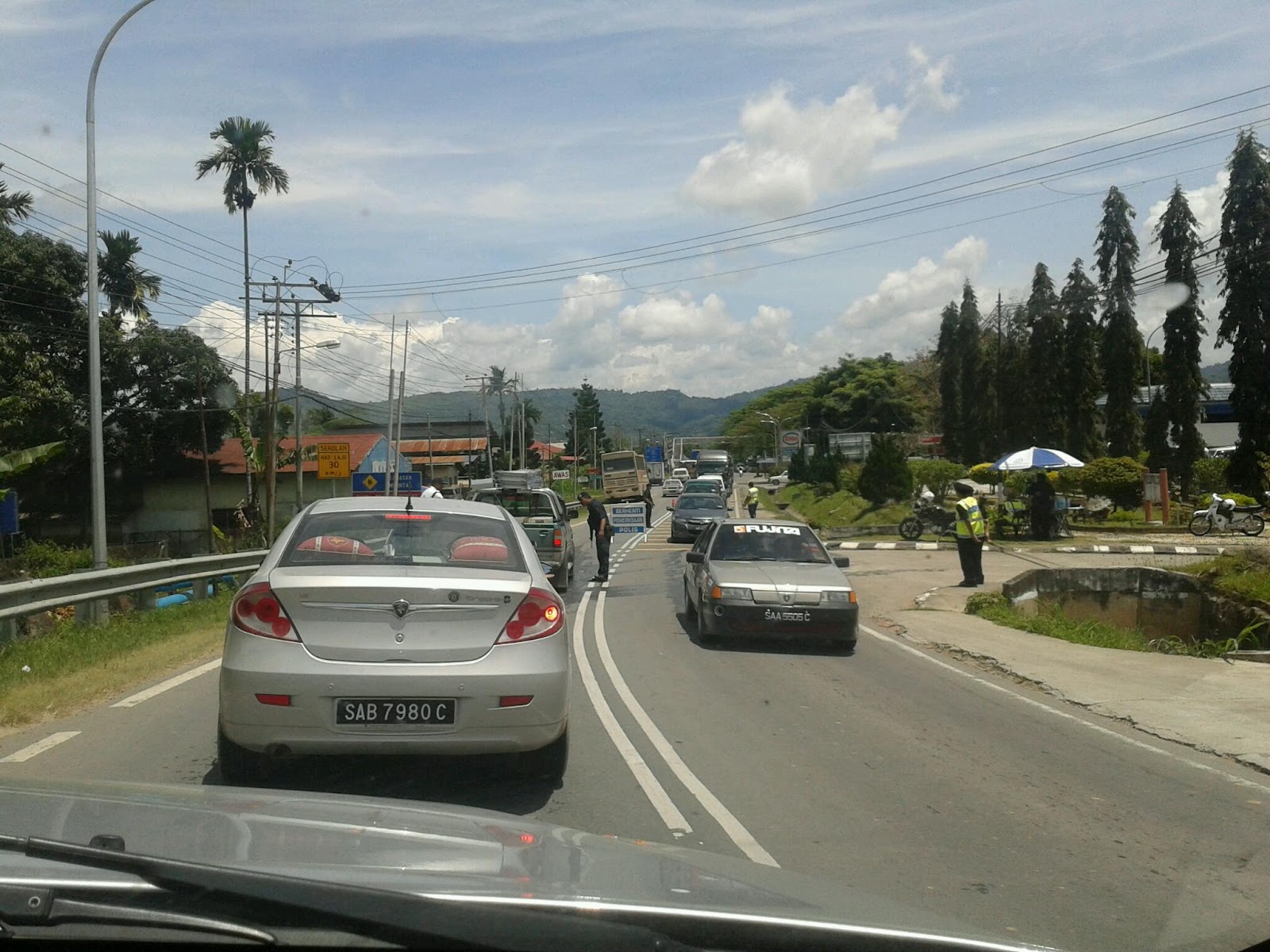
In Ranau district - which is about as far as you can get from the Special Security Area without leaving Sabah - tensions have been running high recently. The Royal Army of Sulu is pretty much the only topic of discussion in the canteen.
On Tuesday, near one of my schools, villagers summoned the police, worried about the sudden appearance of a number of Sulu flags, with a sizeable group of Filipino workers in the timber camp nearby being accused of sympathy for the terrorists. The police had to reassure the villagers that the flags weren't Sulu in origin, and had in fact been put up by an overenthusiastic member of a new political party, as part of the election campaign.
Another day, one of the same Filipino workers asked for a couple of hours of credit at a local vegetable stall, a common enough request in these parts. The stall-owner refused and called the police, accusing the man of trying to steal from him. The policeman, apparently with an eternal well of patience, calmly pointed out that the stallowner still had the vegetables in his possession.
I do feel sorry for Filipinos in Sabah at the moment; the lack of sympathy is astounding. Malaysians are in deep shock at the deaths of eight policemen during the fighting, and are genuinely afraid of what might happen if the 800,000 Filipinos living in Sabah decide to join the cause.
This is not helped by the flood of militant photos and videos on Facebook and the internet. The pictures are violent and scary, showing masked soldiers and guns and prayers being said before battle.


They get more and more graphic: I have (unwillingly) seen pictures this week of decapitated heads being carried by weeping women; dead bodies with their Philippine Army boots highlighted, and corpses in begging positions, their blackened arms raised above their heads. They are more explicit in their depiction of death than I have seen in Western media, but my colleagues do not seem as fazed as I am. Photos of Malaysian deaths carry doas or prayers written on them; Philippine death photos raise questions with the government, for instance, "Why does this man have a Malaysian ID card? Did you invite him here Mr. Prime Minister?"
But the very worst so far came in the staff room at one of my schools, where, before I realised what I was being invited to see, I was seeing the first two dead policemen being beaten and sliced open and kicked by the Philippine invaders, the whole event being filmed on one of their phones for posterity.
With rallying cries like these, is it any wonder that this national grief and terror is continuing unabated?