Showing posts with label Ranau. Show all posts

Monday, April 22, 2013

The Competitive Spirit

The school year in Malaysia divides into two semesters a year, but beyond this fairly straightforward division, there's a secondary set of deadlines: the extra-curricular ones. At the beginning of 2013 was Sports Day - teachers responsible for the school's sports teams had up to a month off classes training and preparing the kids. First comes the zone competition - around ten schools competing in sports from badminton and football, to the South-East Asian sport sepak takraw. The winners move on to compete in the District competition, then regional, then state, and then, for a single school from the whole of Sabah, to national level. 

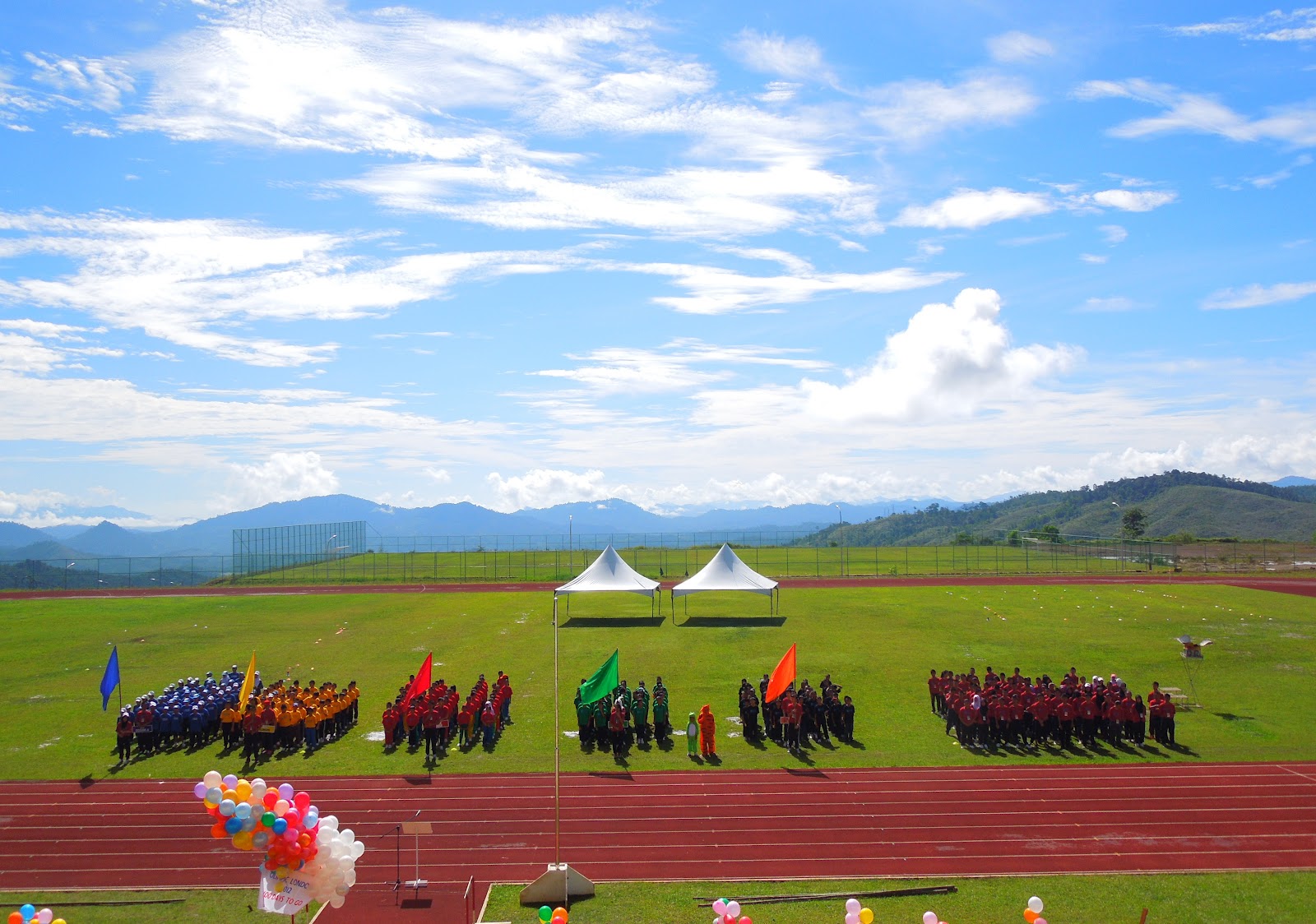
Last week began the second deadline of the year: the Pesta Ko-Kurikulum (Extra-curricular Festival) - a sort of talent show for the kids. And being the local orang putih, I got asked to sit alongside the headteachers of my zone to judge the first phase of the competition.

It focuses on demonstration skills - singing, storytelling, public speaking, and so on. You would recognise most of that list from your own school days. Then we move on to the more diverse stuff. Like gong-beating, for instance. Nation-wide, there's also choral speaking, which is supposedly descended from something British people used to do, back in the dark days of Latin and grammar translation. Nobody I know has ever heard of it, but it's a really big deal in Malaysia - one of the main events of the Pesta.

Choral speaking is done in a large team of around 30 children aged 10 - 12. They literally speak in chorus. They can't move their bodies below the hips, and aren't allowed to use any additional props or materials, wearing only their school uniforms - relying on their voices to bring interest and liveliness to a set text. A single conductor stands at the front, usually wearing white gloves, leading the chorus with gestures and claps. It's impressive to watch when it's done well. 

To do it well means a LOT of training for the kids. Most of my schools had almost no lessons last week, trying to prepare their teams. On Tuesday I got asked to help with the pronunciation of one of my school's teams - I did protest weakly that this might open me up to accusations of bias as a judge, but there was no refusing the school's headmistress, who is a fiery disciplinarian! (Also, as all the judges come from the zone's schools, they all have teams competing in each section, so really, I'm no more biased than the next judge...)


The next morning, they competed, still mispronouncing responsibility despite the two hours of pronunciation work the previous afternoon, and won! Not terribly surprising, as this group of kids is one of the few to seek me out at school to speak in English. Afterwards I got a big hug from the conductor, and a dirty look from a teacher at another school... ;)


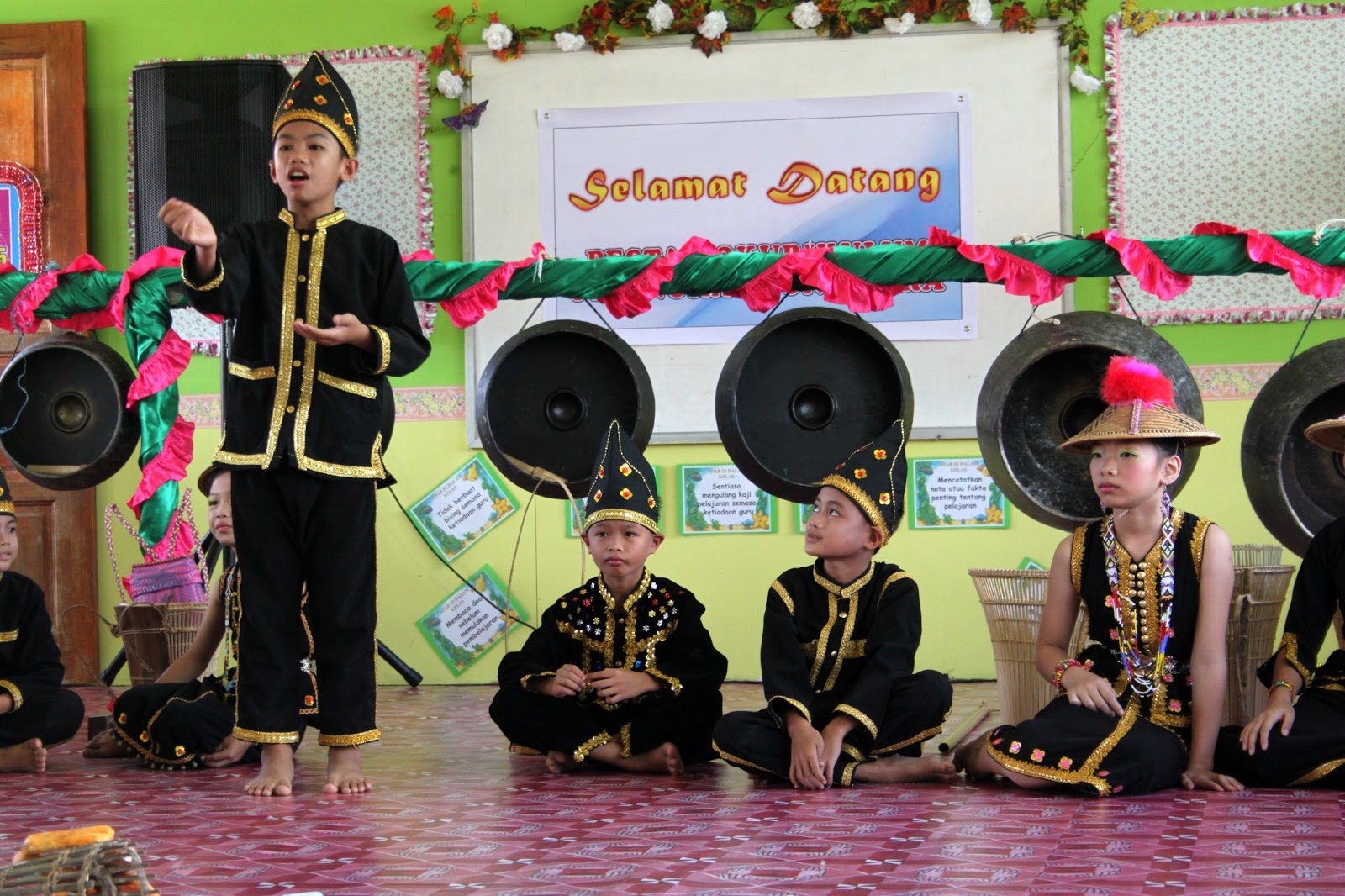
My judging duties discharged for the day, I went to sit with one of my mentees, a preschool teacher, to watch another of the localised competitions - the taboi-aboi. This competition is only done up to district level, as it is performed in a local dialect of the Kadazandusun language, which isn't found outside Sabah.

The taboi-aboi is excellent. Done by a group of 8 to 10 children, it is based on local stories, usually about harvesting fish or rice. The children speak, sing, and act, all the while dressed in traditional costume. One of my schools used a story from a Kadazan tribe (generally Kadazans are lowland tribes, and Dusun are  found in the highlands, while sharing very similar language and customs.)


They were so good that, despite the fact it was in a language of which I know two words ("Thank you", "You're welcome") I could follow the storyline.

The next day, I was back at 8am, ostensibly to judge the Action Song competition, but in reality to sit and wait for nearly two hours while they dealt with "technical problems." I took the opportunity to go and steal some hot Milo from the teachers from one of my schools, who were camped out in one of the classrooms, preparing their children for the contest.

Action Songs is open to Year 3 students. Now, I do know a lot of the Year 3 students in my schools, because they tend to be the ones that my teachers teach, and therefore I observe. But Action Songs just kills me: I cannot recognise a single one of them. This is why:


The make-up on these 9-year-olds might realistically be called "Extreme Make-upping." The classroom was a mass of teachers and parents applying deep shades of eyeshadow to the children.


And don't think the boys get away with it either:


The performances also involve props and costumes and the kids have a lot of fun, grinning their way through any song that could conceivably have appropriate actions to attach to it - Lion Sleeps Tonight is a popular choice every year, and a couple of schools chose Daddy's Taking Us to the Zoo Tomorrow as one third of their permitted medley. Some were a little more adventurous, and one school took for their theme "Happiness," with the little girls singing You Are My Sunshine to the little boys.
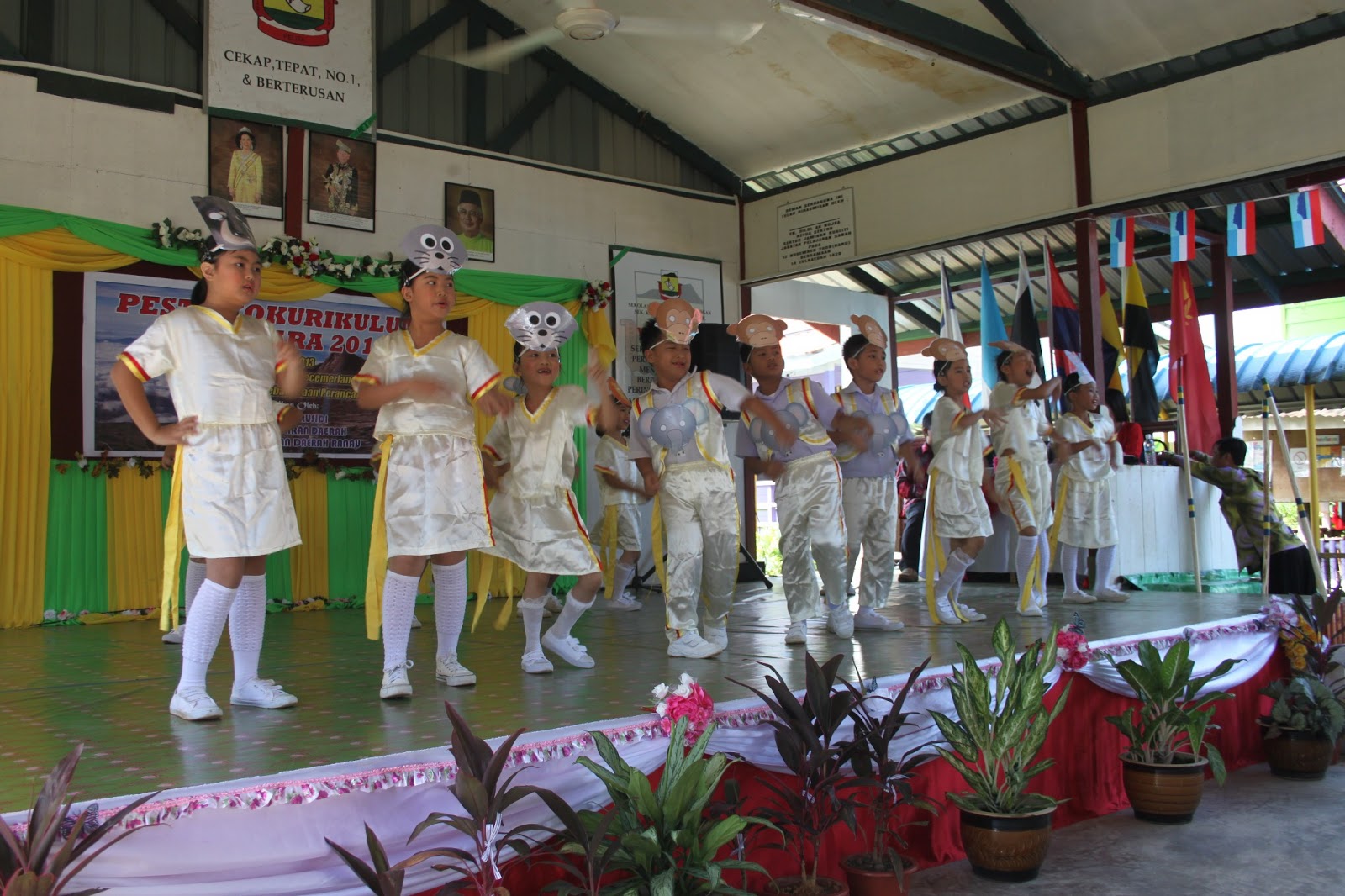


I've been trying very hard to imagine the equivalent ages in the UK performing the Morris Dance with glee on their faces, and am so far failing... :)

Tuesday, September 4, 2012

The End of Fasting


 In retrospect, I probably could have planned it all a little better, but honestly, when I asked around, everyone said it was very unlikely that Hari Raya, the end of the fasting month, would be celebrated before Monday. So I didn't bother to factor the celebrations into our trip and instead booked a bed in K.K. for Saturday night. And yes, in retrospect this might be seen as tempting fate. So I guess it shouldn't have come as a surprise when the young guy in the stall at the night market mentioned that he was heading home as soon as he could shut up his stall, to prepare for the two days of feasting that would start in the morning. The problem was that we were meant to be driving south east in the morning, a 3-hour journey to a village called Nabawan. Instead, I found myself having to accept two invitations in Ranau, resulting in a 2.5-hour detour home, then a 3-hour drive south to Nabawan.

There's a lovely custom in Malaysia called the "open house." These happen around religious festivals - Christmas, Lunar New Year, and, of course, Hari Raya, the king of them all, the Muslim celebration of the end of Ramadhan. People literally open their houses on a set day, put out loads of food and a stack of chairs, and then simply welcome every single person from their extended family, their village, their kids' school, and every other possible source of vague acquaintances. Sometimes they even get an orang putih or two. Because Hari Raya isn't set until the new moon is sighted, people will invite you to their open house on either the first or second day of feasting, or perhaps a later day during the official week of holiday. This year, the moon was sighted on Saturday, so the invitation I'd received from my friend, which I'd expected to be for Monday, when I couldn't possibly attend, suddenly became Sunday, when I could. So I dutifully responded to Suryati's invitation, and when another arrived from one of my teachers, I said yes to that too. 

And thus it was that on Sunday morning, after a restless night of celebratory fireworks, Aurelia's first journey in Sabah was up into the mountain range to little Ranau. Dropping in at home for a short time, we met Lungkiam and Othman leaving for their niece's open house, so we joined them for that. After an acceptable amount of time and food, we said our goodbyes and drove onwards to Suryati's house to coo over her gorgeous newborn baby girl and laugh with teachers from my village school about finding a Malay husband. More food. More dirty jokes. Ah, a day in the life... Suryati's beautiful children and husband were dressed in brand new Hari Raya clothes in coordinating colours and I had to ask them to pose for a photograph before I left. This unfortunately meant that I had to give baby Nur Qisya back...


Then we travelled out to Lohan Village where one of my headmasters was holding court at his enormous house. More food. Sweets. Coffee.


We joined one of my teachers here who was visiting all her colleagues on one long day, together with two other teachers from the same school, and their families. All Christians, but still made so welcome by their Muslim hosts.

From the headmaster, we went to the deputy head's house, a beautiful blue wooden house on stilts. As we walked up, I saw her husband preparing to greet us, and, realising from the clothing and beard that he was a strict Muslim, had to hurriedly whisper to Aurelia, "Don't offer your hand until he offers his!" He didn't, and she didn't, and it was all fine. He welcomed us into his home with a gracious dip of his head. We ate some more food, a lovely curry this time.


And then, of course, because I'd eaten at the headmaster and the deputy head's homes, I couldn't leave before also visiting the home of the head of the afternoon school, so off we went down the road to one last house.

And it really did have to be one last house, as it was by now an hour and a half after my deadline for leaving Ranau. Well-fed-and-watered, we finally set off on the road south, arriving at the house of a very patient colleague well after dark. Her village - little Nabawan - is the last stop before Tawau, a city on the east coast. Between the two lie nearly 300 kilometres of road, most of it untarred and straight through rainforest.

Saturday, May 19, 2012

Birthday Celebrations

Last weekend, Ranau played host to Sabah's Wesak celebration. This was quite an honour, as it hasn't been celebrated in Sabah since the 1980s; the precise date and place was determined by Chinese astrologers (in combination, says the cynical side of me, with the commercial need to have it on a weekend in a large town...) and Ranau came out best. The Chinese Buddhist temple has been undergoing a thorough spring cleaning over the past month or so, and on Saturday night it looked radiant. Temples in Sabah pale in comparison with the richly painted Korean temples, and are mere toddlers in the scheme of things - I believe this one dates back a few decades, while some of the Korean ones I visited were centuries old. But Ranau's temple has some beautiful paintings inside, and on the outside some impressive statues, and it's kept spotlessly bright and cheerful by volunteers. And I like the way that it stands at the top of a very short street that also accommodates an Anglican church and the town mosque. We watched the parade standing across the road from the mosque, and were thus constantly reminded of the balance between the national religion and others.

So. Wesak Day. Wesak Day is also known as Buddha's Birthday, and it's generally a public holiday across most of Asia, time for Buddhists to meditate on his teachings and life.

In Ranau it was time for a great big assault on the senses - incense, drums, shouting, whistles, bright neon lights all had their parts to play. The Lion Dance made another appearance too; they leapt and growled and shook at the front of each section of the procession.


In the heat of the late afternoon, the dancers took it in turns. When not dancing, they took over as musicians, still dressed in the lions' legs. The pink pom-poms on toes were particularly appealing.


The noise was astounding - Fiona and I had to shout to each other to be heard sometimes over the drums and tambourines and whistles. 

The parade began at sunset with various groups from across Sabah walking down the hill. A lot of them were elderly Chinese men with huge banners proclaiming their origins, who laughed and pointed at us and called out "Welcome to Malaysia!" Other groups were young, wearing Buddha costumes and carrying flags on bamboo poles.


The flags, intricately embroidered with dragons and flowers, were entirely in the lucky colours of reds and oranges, and they absorbed and enhanced the colours of the setting sun. 


As the darkness settled, the celebrations became more intense and religious. There were men walking down the street, seemingly in the grip of seizures, each one surrounded by three more men, holding their arms out, confining the babbling, gesticulating man. This was a more Malaysian version of Buddha's Birthday, and not one I saw in Korea. The central man calls down the spirits, the gods, into his body. They thrash around, using his bamboo whip to lash out at human beings. The three guards are preventing the gods from escaping and wreaking havoc on the town. The procession makes a full circle through the town to keep the balance and to symbolically close the loop of protection that is created by allowing the gods to have their way for a few short hours.


Some groups bore wooden boxes in the shape of temples, lit up in chains of neon lights. The boxes were rocking wildly; the young Buddha was inside, playing, and messing with his carriers. 


Sometimes he made his carriers shoot off out of the procession, careering madly around the roundabout, handily situated at the bottom of the street.


After the procession had made its way around town, we walked up to the temple and sat for a while at the courtyard fountain. Although this was a strictly Chinese Buddhist celebration, there were all sorts of onlookers - kids still in school uniform, elderly women in Malay sarongs, Catholic nuns, and most of Fiona and my students and teachers - walking from A to B took a looooong time as we stopped to chat and say hello.


Inside the temple, men and women lit joss sticks and carried them to pictures of different deities to pray before.


The next day when I drove down the mountain to K.K., I drove the whole way behind a procession of cars billowing silk from the windows and carrying piles of red wooden boxes and bamboo sticks in the back seats.

Thursday, May 3, 2012

Cycling? Bah!

Last Monday, I was driving home from school; this was a village school, past Lohan Village. There's one road in and out for the whole area, in which several hundred people live. There are some facilities - a couple of small shops, a few schools, two marketplaces - but for anything else, people drive to Ranau, about 20 minutes away, on the afore-mentioned one road.

So. One road in and out. Several hundred people, several hundred cars. Got it?

The road was closed.

As I came up to the junction with the main Kota Kinabalu-Sandakan road, I slowed to a halt behind about twenty other cars. I couldn't see any obstruction, but I patiently waited to see if we would move. I point out my patience, because I was the only one - everyone else seemed determined to be further forward than everyone else; of course, there's a fundamental flaw in this plan, and what actually happened was that eventually there was no more space between cars, and overtaking cars ended up stalled on the wrong side of the road. After about twenty minutes, I got out and started walking towards the junction. I saw two of my Guru Besars (literally big teacher, or headteachers) talking to each other and stopped to ask if they knew the problem. They did. The road was closed because the first ever Tour of Borneo, a cycling race mimicking the Tour de France, was today coming through Ranau. Apparently it was a surprise for everybody, including the police, who stood around at the junction guarding their yellow tape barrier shrugging their shoulders at angry drivers.

This was at 1:30pm.

At 3pm, we were still standing around.


At 3:30pm, some of us were allowed to drive down the empty road to a supermarket 100m away so that we could buy drinks or food. I stood with some friendly policemen-and-women.


We talked about race, religion, marital status, and age, plus a couple of other banned topics. Just a normal conversation in Malaysia, then. Occasionally we were passed by elderly men and women, traditional cloths wound around their heads and basketry on their backs. I wondered what they made of the wailing support vehicles and empty roads. By the looks on their faces, and their dogged walking, they generally didn't care very much.


At 4pm, the cyclists finally came through. Basically, the road had been closed for 3 hours, so that a hundred cyclists could spend twenty seconds riding down a completely empty road. And I do mean twenty seconds - those guys are fast. The ones towards the back were a little slower - they had after all ridden all the way from Sandakan, up the side of a mountain range - and I nearly caused an accident as one looked up and spotted what was probably the only orang putih he'd seen since Sandakan, swerving towards me. It caused a few chuckles among my policemen friends.


Finally, after four hours of shutting down Sabah's main road, we were allowed to get moving again. The following day being Worker's Day, of course, everybody was travelling somewhere, and so all the hundreds of cars that had been waiting at junctions and in supermarket carparks across the state suddenly flooded the road. My friendly policemen just up and left, with no intention of directing traffic. My usual two hour drive to KK turned into a three hour one, and as I passed some knackered looking cyclists sitting down to dinner in Kundasang, at a cafe overlooking the snarled-up traffic, I felt like shaking my fist and shouting "You did this! You!"

One good thing to come out of the day (apart from cheering on the cyclists with a bunch of bemused villagers, who'd never seen lycra before) was that on my foray into the supermarket I discovered these cleverly marketed crisps.


Really?

(PS. I do actually like cyclists, promise.)

Tuesday, April 24, 2012

Olympic Countdown

The Olympic campaign is in full swing, it seems. Last week I was summoned to a sports day at the Ranau Sports Ground by the British Council - the very amiable head of B.C. Malaysia was due to be in attendance, and "would very much like to meet any mentors living in the area." I ignored the implication that them in Kuala Lumpur head office had no idea who was living in Ranau and apparently had no records of our names that they could check, and dutifully cleared my diary. On arrival I was shown to the teachers' section, my guide explaining that "Gavin's up in the VIP area, but I'm sure he'll pop out to see you." Well. I'm not used to not being the VIP in the area, but I was quite pleased to be able to quietly sit with the teachers from one of the schools taking part. Soon the VIPs came out to take their seats - typically, these were comfortable cane chairs with cushions, arranged in a line on a tiled area, before a table carrying water and snacks, in contrast to the concrete steps the rest of us were making do on. Not that I'm in any way jealous, mind you. By this stage the band had started up, and the five selected schools were making their way onto the field, each one representing a continent.


Sorry, I should have said "making their way onto the best sports field in the world." Look at that view! 

The VIPs set off a hundred balloons, taking with them a sign to celebrate the occasion - as it disappeared into the sky, I wondered about the villagers who would wake up the next day to find this incomprehensible piece of fabric tangled up in their rambutan trees.


The obligatory run with the torch came next, with students from each school relaying the homemade torch to each other, then continuing on together - surprisingly touching!


Finally came the obligatory dancing girls - which I have no objection to at all. Every time I watch this particular dance - the Bamboo Pole Dance, apparently, with no sense of irony - it amazes me that nobody loses a leg. The four girls sitting on the ground slam together bamboo poles in time to a drumbeat. Two girls then skip easily through the poles, lifting narrow ankles just clear of the sticks-of-death, smiling prettily all the while.


I'm always a little relieved when the end comes and the poles are lifted up for applause from the audience.


And then the VIPs all disappeared inside for makan-makan - the popular Malaysian pastime of eating. We were spotted by a BC official who recognised us from a previous mentor gathering, and ushered into the VIP area, where we chatted to our big boss, ate banana rice from leaves, and vaguely watched the sports events from behind a glass window. This seems to be the usual state of affairs; officials attend an opening, then leave the actual event to the participants and a scattering of spectators. The officials today were lovely and friendly to us - the Minister of Education for Sabah thanked Fiona and I for all our hard work, the MP for the district wanted to hear what we were up to - but nobody paid the slightest bit of attention to the day's main stars - the children out on the field, practising their newly-attained skills in javelin throwing and 100m sprints.

Friday, February 10, 2012

Padi Scarecrows

The rice fields have been growing for some time now, getting taller and greener day-by-rainy-day, and they're just getting to the point where greedy birds are an issue. The farmers near me are amazingly inventive about keeping these scavengers away - there are black plastic bags strung up on wire, lovely homemade wooden windmills (which I haven't yet been able to photograph) and old t-shirts. I took this picture at dusk on my way back to town from the villages.


Some have made scarecrows - and they wear hats that I would scavenge, were there not family members living on-site to protect their plot.


On my way home from a relaxed walkabout on the mountain last weekend, I passed one that was bright and red and beautiful amongst the rich greenery - I wish my photos did it justice...


Tuesday, February 7, 2012

New Year Number Three

The Islamic new year was celebrated very quietly in Malaysia last November. The Western new year was celebrated in the big cities with fireworks and a few drinks. Finally, though, we've reached the most impressive new year of them all: the Lunar new year, the Chinese celebration of the move into the year of the Water Dragon. This is such an auspicious year that midwives and baby equipment suppliers are already hiking their prices for the expected rush of Dragon Babies

Muharram was a single sober day, New Year was a few hours of celebration. The Chinese in Malaysia have been partying for two weeks. It began on January 23rd with children chucking firecrackers in the street, loud karaoke in the Chinese cafes, outrageous shopping sprees and a sudden explosion of red - an auspicious colour. Even the traditional Malay shops - shops that cater to Muslim women - got in on the action.


The celebrations have been a little more muted than those of Hong Kong, Singapore, and China itself. My experience of lunar new year has been one of glimpses - a glimpse of a man wearing the golden legs of a lion after performing the lion dance, the sound of drums as a lion dance finishes, the discarded confetti after a lion dance has been there. Yes, the lion dance occurs a lot. It is fundamentally to scare away the evil spirits and to attract luck and fortune, and dance troupes travel the country during the new year visiting businesses and organisations. They are rewarded with ang pow - the little red envelopes containing money that rival the lion dance for sheer visibility at this time.

Last night was our little town's official celebration. I was invited with my colleague and some other long-term homestay residents by the owners of our homestay, who are delightful and warm and friendly and who have the added ingredient of being ex-politicians, and pillars of the community. A friend who came to visit this weekend also came along. I probably didn't prepare her enough, in retrospect, but then even I didn't expect to be driven through the security barrier to the steps of the hall, where we clambered out in front of an audience of lesser persons, and were greeted by our very own lion dance - and when I mean our very own, I mean they performed for just three groups - the head of the Chinese Association of Ranau and his entourage, the Member of Parliament for Ranau and his entourage, and Doctors Lungkiam and Othman and us. The plebs just walked in a side door and sat on benches or rows of chairs. We were guided to one of five tables in the centre. We were, you might say, the centre of attention. Haha. Ahem...


The evening started with a lot of speeches by the proper VIPs (they had white coverings on their chairs, to differentiate them from the RIPs (the Relatively Important People) - that's us) whose pictures were prominently displayed on the stage. Then each table received a large plate with neat and tidy piles of various shredded food, like ginger, and onions that had been dyed green - and we all stood up; the MC counted down from three, and we all grabbed our chopsticks and gleefully and communally mixed up the "salad". 


Then we got to eat it while the povo looked on. That wasn't uncomfortable at all.

The lion dance was the main draw of the evening for me. The lion is made up of two men, one in the rear, one in the head, and it is a mastery of martial acrobatics. The head is the most ornate part, with enormous eyes with blinkable eyelids that turn to eye out the audience and other lions, giving him a remarkable character and personality. The mouth opens and closes, and there's a mirror on his forehead - demons are frightened off by their own appearance. Our main lion was black, and he leapt over the stage and strategically placed tables, twitching in time to the energetic drums that waxed and waned throughout the performance, building up to crescendos and then suddenly falling away to almost complete silence.


Pretty spectacular. I think, though, that next year I will leave the glimpsing behind and head for the centre of the action in Singapore...